Red temperature light or rising gauge
The engine may be overheating. Continuing can cause severe, costly damage. Pull over safely, turn the engine off, and let it cool before checking coolant.
No jargon, no pressure, no fine print. Just the honest basics of keeping an everyday car healthy, safe, and out of the repair shop.
By the end of this guide you'll know when to service the important things, what the lights and noises are trying to tell you, and how to deal with a mechanic without feeling lost.

Read it top to bottom once to get the big picture, then come back to single sections when you need them — before a long trip, when a light comes on, or when a shop hands you a quote. Every section opens with a one-line answer in a tinted box, so skimming the headings and those boxes gives you most of the value in a couple of minutes.
Start here
Short answer: caring for a car is mostly a small, predictable rhythm — keep the fluids fresh, keep the tires and brakes healthy, watch for changes, and fix the small things before they become big ones.
It can feel like there are a hundred things to track. There aren't. Almost everything in this guide fits into five simple habits. Get these and you've covered the parts that keep you safe and keep repair bills small.
Engine oil, coolant, brake and other fluids do quiet, important work. Changing them on schedule is the single highest-value habit there is.
These are your only contact with the road and your only way to stop. Correct pressure, healthy tread, and brakes that feel normal are non-negotiable for safety.
You know your car's normal. A new noise, light, smell, or leak is information — this guide helps you read it and judge how urgent it is.
Following a simple schedule by miles or months means problems get caught at a check-up instead of on the side of the road.
A mechanic you trust — and a little knowledge so you can ask good questions — turns repairs from stressful into routine.
"The cheapest repair is almost always the one you prevented." — the quiet logic behind every maintenance schedule
Section 1
Short answer: use the table below as a general rhythm — but your owner's manual always wins. Intervals genuinely vary by make, model, engine, and how you drive.
The table gives typical, widely cited general intervals for common vehicles. Think of it as a starting map, not a rule for your exact car. "Severe" conditions — short trips, stop-and-go traffic, towing, extreme heat or cold, lots of dust — shorten almost every interval, and many manuals list a separate severe-service schedule.
| Item | Typical interval | Why it matters | Type |
|---|---|---|---|
| Engine oil & filter | Every 5,000–10,000 mi or ~12 months (synthetic often longer; follow the oil-life monitor) | Clean oil protects the engine from heat and friction; old oil is the most common cause of avoidable engine wear. | Fluid |
| Tire rotation | Every 5,000–8,000 mi (often paired with an oil change) | Evens out tread wear so tires last longer and grip stays balanced. | Routine |
| Tire pressure | Check monthly & before long trips | Correct pressure means safer handling, shorter stopping, better fuel economy, and even wear. Use the figure on the driver's-door label, not the tire's max. | Safety |
| Brakes (pads & inspection) | Inspect ~every 10,000 mi or at each service; pads often last 25,000–70,000 mi depending on driving | Your ability to stop. Catch worn pads before they damage rotors — and never ignore a brake warning light or grinding. | Safety |
| Brake fluid | Typically every 2–3 years | Brake fluid absorbs moisture over time, which can reduce braking performance. | Fluid |
| Engine coolant / antifreeze | Roughly every 30,000–60,000 mi or 2–5 years (varies widely by coolant type) | Prevents overheating and freezing and protects the cooling system from corrosion. | Fluid |
| Transmission fluid | Commonly every 30,000–60,000 mi (some are "lifetime" — check the manual) | Keeps gear changes smooth and protects an expensive component. | Fluid |
| Engine air filter | Every 15,000–30,000 mi (sooner in dusty conditions) | A clean filter helps the engine breathe, run efficiently, and stay clean inside. | Routine |
| Cabin air filter | Every 15,000–25,000 mi or ~once a year | Cleaner air inside the car and a heater/AC that flows freely. | Routine |
| Battery | Test yearly after ~3 years; many last 3–5 years | A weak battery is the classic "won't start" surprise, especially in cold weather. | Routine |
| Belts & hoses | Inspect regularly; replace per manual (a timing belt, if fitted, is often ~60,000–100,000 mi) | A snapped belt or burst hose can leave you stranded — or, with some timing belts, damage the engine. | Safety |
| Wheel alignment | Check if the car pulls, the steering is off-center, or tires wear unevenly; many check every 2–3 years or with new tires | Good alignment protects tire life and keeps the car tracking straight. | Routine |
Section 2
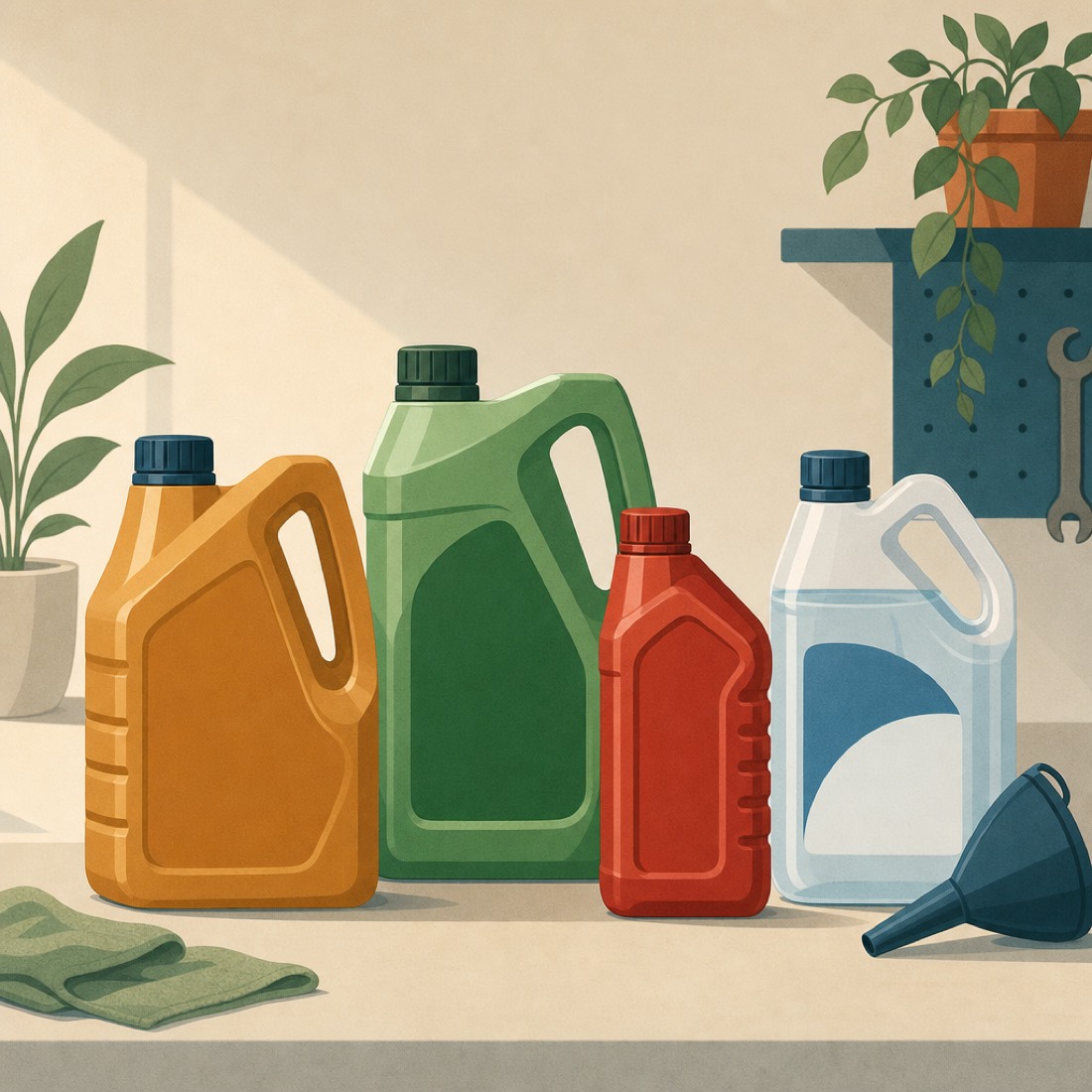
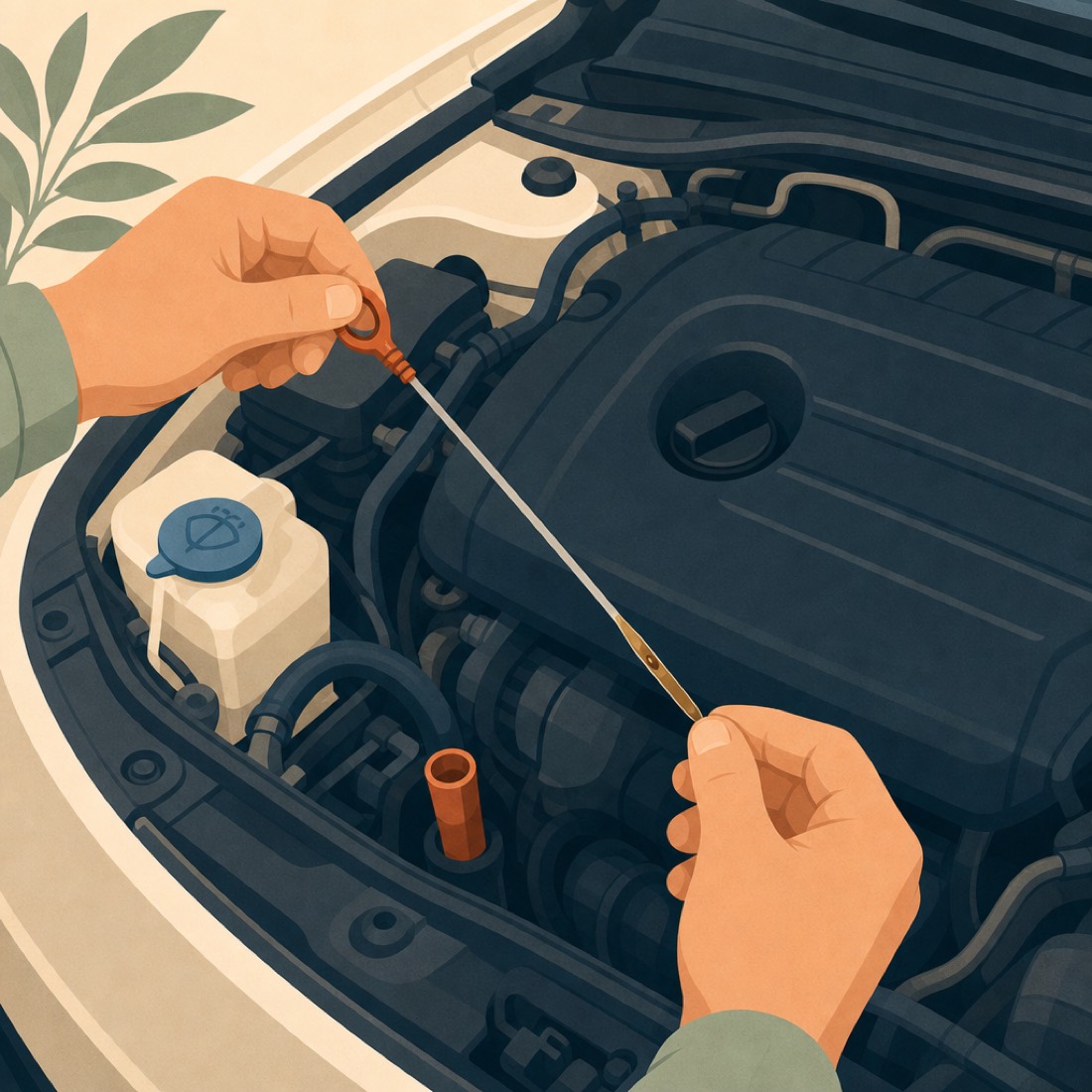
Short answer: fluids are the car's lifeblood. Most can be checked in two minutes with the engine off and cool — you're looking at the level and the colour.
You don't need to change fluids yourself to benefit from knowing them. A quick monthly glance can catch a slow leak or a low level long before it becomes a breakdown.

Section 3
Short answer: lights, noises, smells, and leaks are your car's language. As a rule of thumb — amber = soon, red = now, and anything affecting steering, braking, or the temperature gauge = stop safely.
You don't need to diagnose the exact fault. You need to judge how urgent it is and act accordingly. Below are the common signals grouped by how quickly they usually need attention.
The engine may be overheating. Continuing can cause severe, costly damage. Pull over safely, turn the engine off, and let it cool before checking coolant.
This is not a "change the oil soon" light — it can mean dangerously low oil pressure. Stop safely as soon as you can rather than risk the engine.
Anything that affects your ability to stop is urgent. A grinding noise, a pedal that sinks, or the brake light on deserves immediate attention.
A flashing (not steady) light often signals a misfire that can damage the catalytic converter. Ease off the accelerator and get it checked as soon as possible.
Usually safe to drive gently, but something needs attention — from a loose fuel cap to a sensor. Have the code read soon; many shops do this quickly.
A squeal when braking can mean worn pads; a clunk over bumps can mean suspension; a knock under load deserves a professional ear before it grows.
A sweet, syrupy smell can mean leaking coolant; a hot, burning smell can mean oil on hot parts or a brake/clutch issue. Don't ignore new smells.
Note the colour and location: dark brown/black can be oil, green or pink can be coolant, reddish can be transmission fluid, clear is often just AC condensation (normal).
Often just a pressure that's dropped with cold weather. Re-inflate to the door-label figure; if it keeps returning, have the tire checked for a slow leak.
Can be an early sign of a tiring battery, especially past three years. Have it tested before it leaves you stranded on a cold morning.
If anything affects your ability to steer or stop, if the temperature gauge climbs into the red, or if you smell smoke or fuel, treat it as a stop-safely situation:
Section 4
Short answer: get it in writing, ask to see (or keep) the old parts, and don't be rushed. A trustworthy shop explains what's urgent, what can wait, and shows you the evidence.
Most mechanics are honest professionals. A little structure on your side keeps the rare bad experience from happening to you — and makes good shops easy to recognise.

Section 5
Short answer: plenty — the small, no-lift, no-live-electricity jobs. They cost nothing, build confidence, and catch problems early. Leave brakes, lifting the car, and fuel/electrical work to a pro.
None of these require tools beyond a tire gauge and a rag. Doing them once a month turns "I hope the car's fine" into "I know it is."
Section 6
Short answer: the car doesn't change, but the demands do. Cold stresses batteries and tire pressure; heat stresses coolant and the battery too. A short check at each season change keeps surprises away.

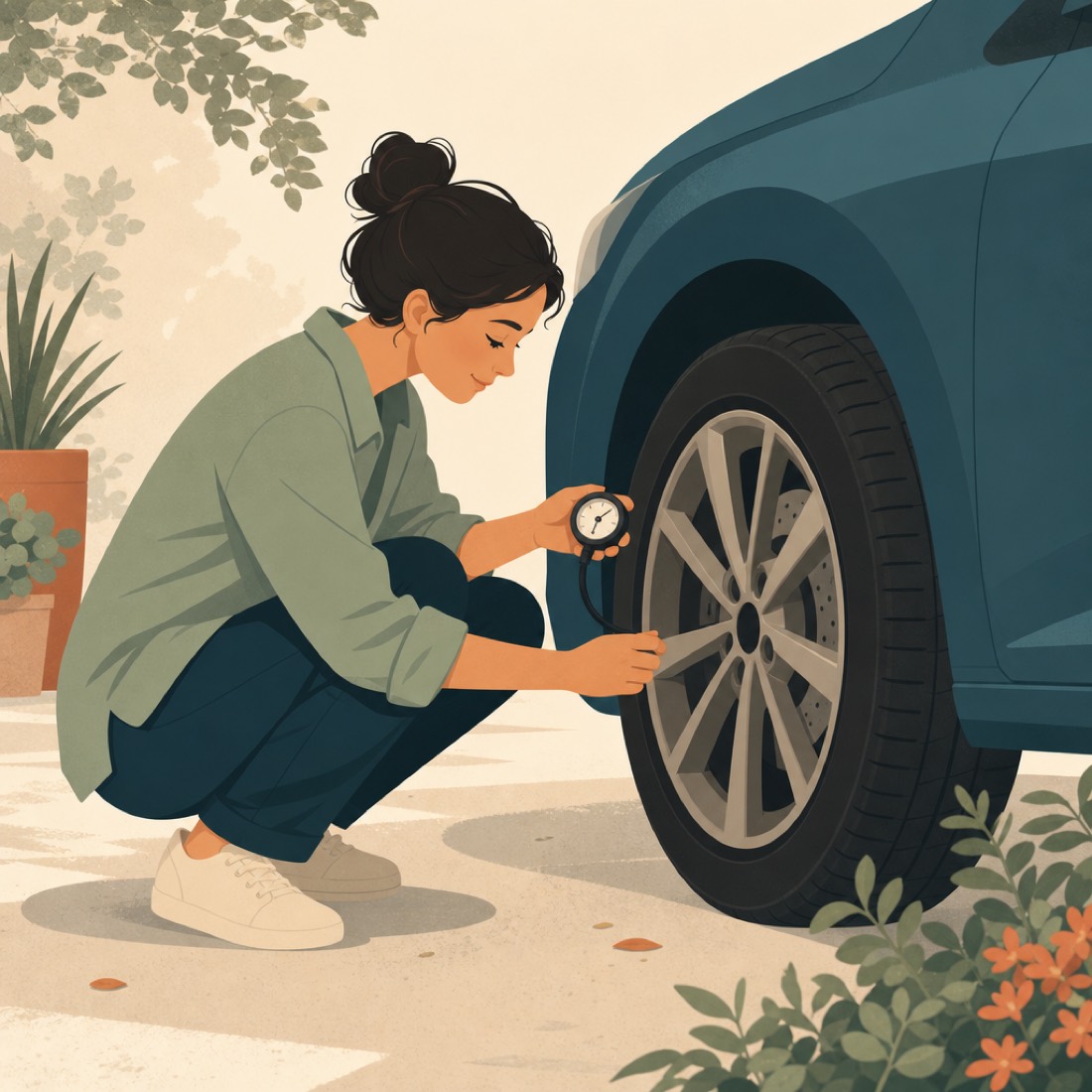
Short answer: these two systems are pure safety. Healthy tread, correct pressure, and brakes that feel and sound normal are worth checking more often than anything else.
Tread depth decides how well you stop and grip in the wet; many regions treat a worn tire as unsafe and even illegal. The built-in wear bars or a simple coin test tell you when it's time. For brakes, trust your senses: a new squeal, a grinding sound, a pedal that feels soft or pulses, or a longer stopping distance all mean it's time for a professional look — sooner rather than later.
Reference
Short answer: the terms a shop or manual might use, in everyday words — so nothing on your invoice is a mystery.
Quick answers
It depends on your car and oil type. Many modern cars on full-synthetic oil go 7,500–10,000 miles or about once a year, while older cars or harder "severe" driving may want 3,000–5,000 miles.
The only number that truly matters for your car is the one in your owner's manual, or the figure shown by an oil-life monitor if your car has one.
A steady check-engine light usually means you can drive gently and get it checked soon — it can be something minor like a loose fuel cap.
A flashing check-engine light signals a more serious problem such as a misfire that can damage the catalytic converter; ease off and have it looked at as soon as possible. Any red warning light, or a temperature gauge climbing into the red, means stop safely as soon as you can.
Ask for a written estimate before work begins, ask them to keep any replaced parts, and get a second opinion on big-ticket repairs. Be cautious of pressure to fix something "right now" that wasn't your reason for visiting.
A trustworthy shop explains what's urgent versus what can wait and is happy to show you the worn part.
Most owners can safely check tire pressure and tread, top up washer fluid, replace wiper blades, check fluid levels (engine off and cool), swap a cabin air filter, and inspect lights.
Leave brakes, anything that needs the car lifted, and live electrical or fuel work to a professional unless you're trained and properly equipped.
Most often it's a tire that's dropped below its target pressure — very common when the weather turns cold. Re-inflate all tires to the figure on the driver's-door label (not the maximum printed on the tire).
If the light keeps coming back, have the tire checked for a slow leak or a faulty sensor.
Sometimes — but "lifetime" can be optimistic, especially for transmission fluid under hard use. When a manual lists a fluid as lifetime, it's reasonable to ask a trusted mechanic whether a change is worthwhile given how you actually drive.
Trust & transparency
This guide summarises widely published, general car-care guidance. Intervals and figures are typical ranges, not promises for your specific vehicle — your owner's manual is always the authority for your car. For deeper, authoritative reading: